Showing posts with label warmtamale. Show all posts

Getting the band together

The band made history when they became the first non-Orcs to perform at the Waaaghken festival

It is all but guaranteed that any civilised settlement will possess within its boundaries at least one tavern, hostel or other such communal centre. These are places for locals and travellers to gather, drink and, of course, sing.

Many inns will allow - encourage, even - skilled bards and minstrels to entertain the patrons. Happy customers spend more freely and if the musician is even halfway competent then the least they can expect in return is food and lodgings for the night.

Of course, in an age in which news travels swiftly only for those with coin to tempt it, most folk rely on the accumulated knowledge of history to guide their decisions and give them hope in lean times. The "oral tradition" scholars call it, but this diminishes the spiritual depth of joining one's voice to a choir which stretches back generations and keeps fresh the wisdom earned by those who are long since departed.

On occasion, talented individuals will group together in performing troupes, roaming the lands seeking fame and, more than this, fortune.

Such a band emerged from the foothills of Jeldenburg and has since proven worthy of a mention in the chronicles of the Tallowlands...

 Founding members


Anbeth Willowbrook

A daughter of the Oakleafen, Willowbrook is an accompanist par excellence. Had she been born to human or dwarfen parents her talents would almost certainly have been lauded and nurtured. However, the wood elves are a more self-centred folk and respect only the virtuoso and the soloist. Therefore her sympathetic and collective approach was sneered at and considered somewhat inferior.

After a time, Willowbrook came to realise that she would never find musical fulfillment within the boughs of Oakhall and undertook to depart the forest, never to return until her music was considered fit for the halls of lords and nobles.

This happened within a week.

After leaving Oakhall, she travelled west towards Jeldenburg. On her first night in human lands she arrived at the town of Yuldpass where, purely by chance, she met Horst vander Jeld, royal minstrel to the Demiprince Arnhuus. He invited her to join him in performing at the tavern that evening; after the opening, unrehearsed song he insisted that she perform with his troupe at the palace the following evening.

Despite being a little suspicious she agreed and was stunned to discover how highly humans valued her skill at weaving rhythms for the other musicians to work with. She remained in residence at the palace for a number of weeks - unsure of whether she could really return return to Oakhall so soon, or if she even wanted to - until one day she met Helen Highwater and chose to join her in the wandering life.

It is unclear whether Anbeth is her true name or a pseudonym to help her avoid the stigma of association with the belligerent Oakleafen when in human lands.


Helen Highwater

A gnome from the near East, Highwater travelled the Jeldenburg circuit for some time before her meeting with Anbeth Willowbrook. Despite her stature she has a strong and charming voice which, coupled with her easy humour and excellent sense of timing, makes her an ideal frontwoman for the band.

She is not the most capable lyrist, but in truth she plays it only to help her stay in tune when the crowd gets rowdy.


 Tomlin Picc

Picc was only supposed to be passing through Jeldenburg when he heard that Willowbrook and Highwater were looking for musicians to join their group. He had seen Highwater performing two nights previously and been impressed, so sought them out.
 
His playstyle is heavier than the classical tradition would dictate, partly as a result of spending considerable time playing with a dwarfen troupe from the hold of Kanderbad - in order to keep up with the horns he learned to modulate his own volume and use the echoes inherent in dwarfhall acoustics to boost his sound when playing melody.
 
It is a point of some interest that he is one of the few humans to have had his playing recorded. Recording music, as everyone knows, requires vast magical resources (not only for the recording, but also the listening) and in practice is available only to a few extremely wealthy dwarfs.  During his time in Kanderbad he worked on a few sessions for the legendary Pol Makka when he was recording the groundbreaking Band on the Rune.


 Rei Barleysheaf

Last of the founding members to join, Barleysheaf was heard by Willowbrook playing flute while she waited for a stagecoach out of town. Her ethereal manner of playing provides a new dimension for the band and allows them to explore some less boisterous musical avenues.

Joining the band represented a significant upturn in her professional fortunes - the stagecoach she was waiting for was to take her home, having run out of money. This was partly due to her having adopted the stage name Rei Gunne, which left audiences and critics baffled. Since joining the band, however, she has flourished and her distinctive manner of playing is now recognisable across the lands.

Inexplicably popular with male crowds.
 

Later members


Rhuston Va

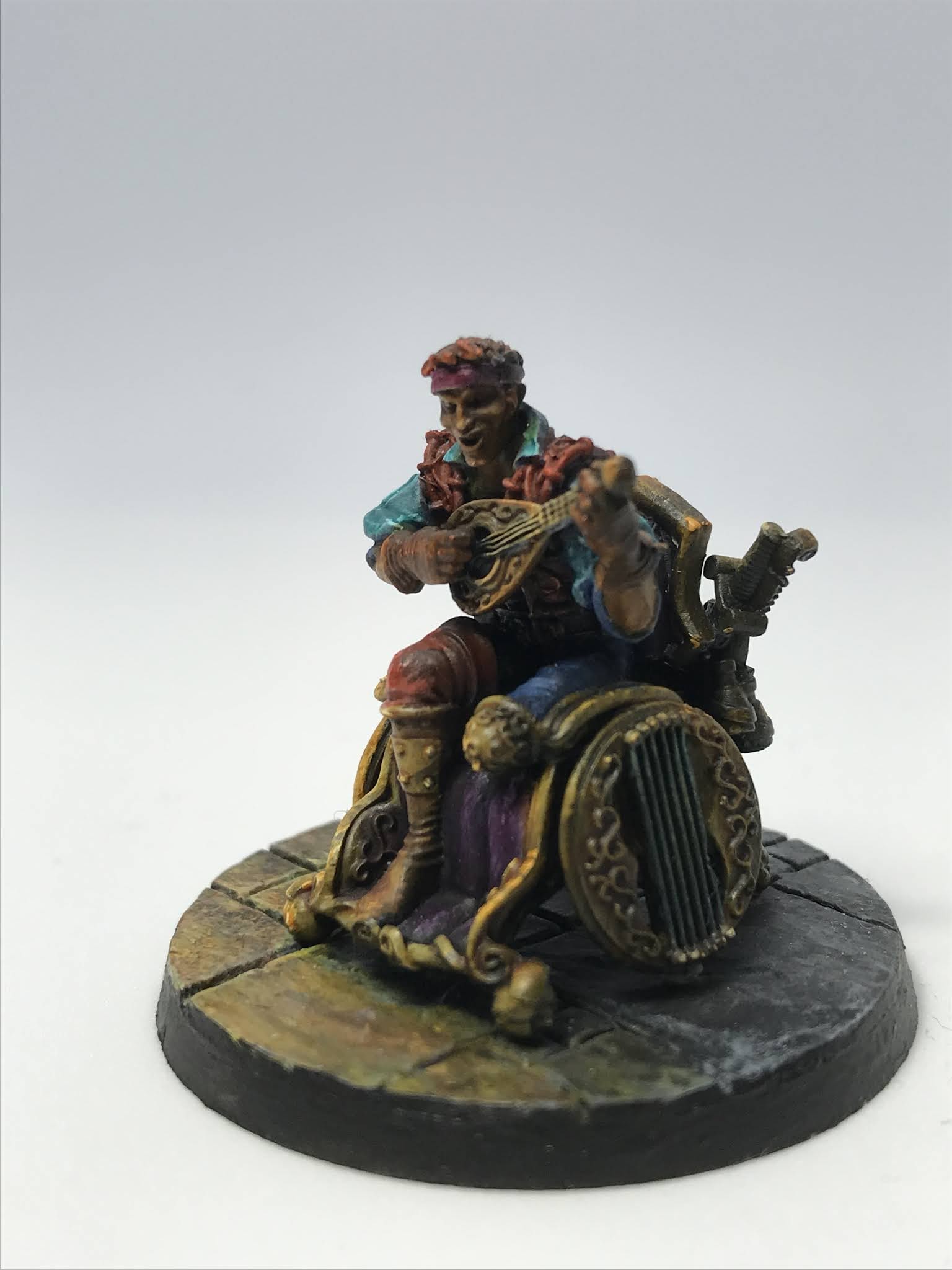
An ex-rogue, his thieving days came to an abrupt halt when he was struck by a runaway cart while crossing the road ("I used to be an adventurer, but then I took a barrow to the knee"). In need of alternative work, he discovered that dextrous fingers were well employed in playing the mandolin.

Confident by nature, he is an excellent sidekick to the egregious Helen Highwater and a well-matched foil for the more understated Anbeth Willowbrook.

His signature style is to play using the neck of a glass bottle or an appropriately-sized bone from a vanquished foe (or, more likely, last night's chicken dinner). This is a technique he first encountered during the band's brief but eventful stay with Clan Morris.


As an aside, this model was an early attempt at using the grisaille method of painting.


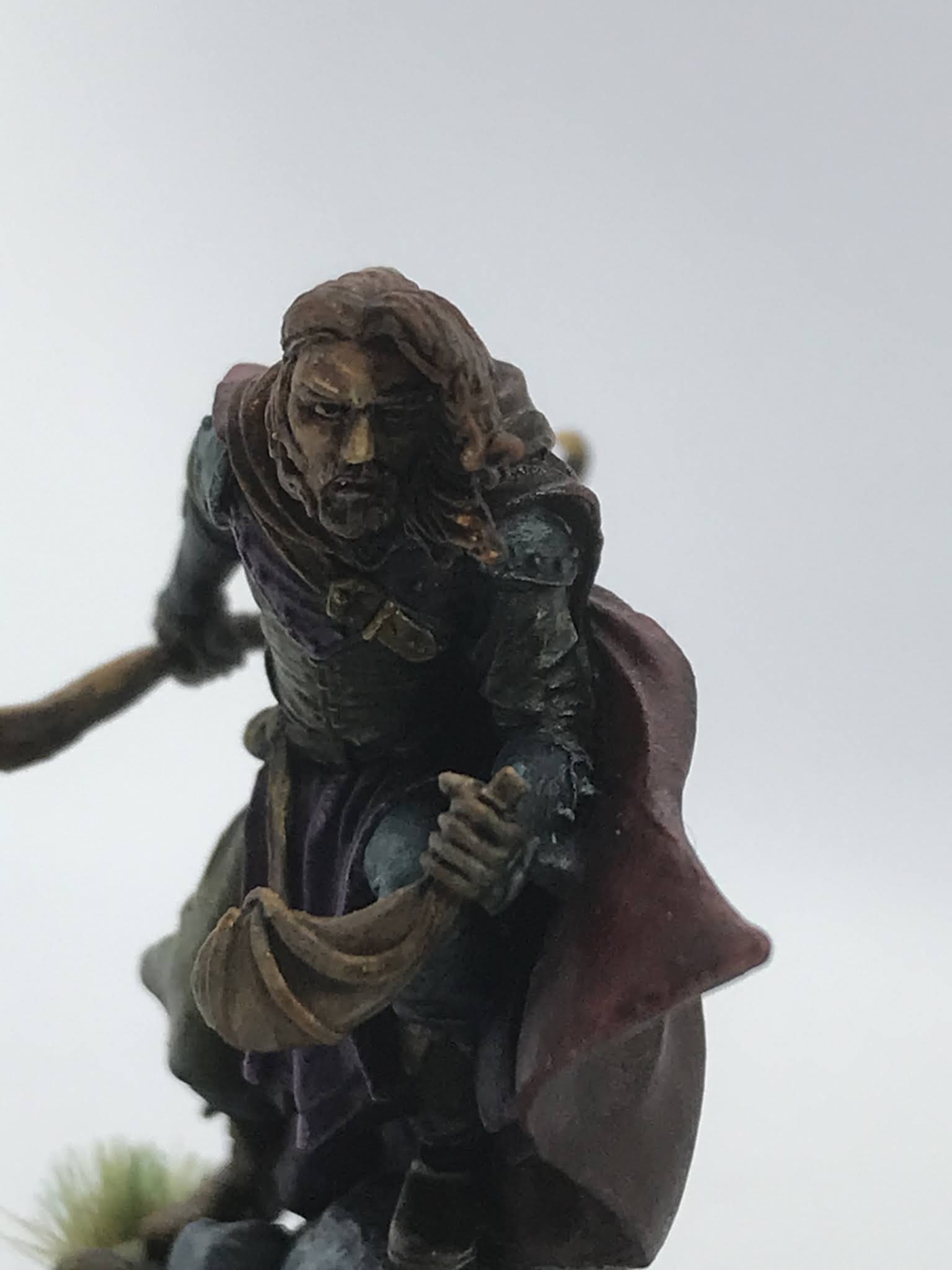
Profile: Alaster of Meici’s Trail


The fall of the Sinian Empire saw many denizens of the southern reaches escape across the border into the Southern Fiefdoms. Most fled only when the tides of catastrophe broke on their doorsteps, hurriedly leaving their homes behind, carrying the few possessions they could snatch up in haste.

A lucky few left sooner, either through canny foresight or pure coincidence. Among their number was Alaster. A professional lockpick by trade, by sheer fortune he was abroad working on behalf of the Locksmiths' Guild when his homeland was laid to waste. As news of the unfolding disaster reached the Southern Fiefdoms it became clear that he had no hope of returning. Like many others at that time he joined Meici's Trail, the vast refugee caravan which wound through the towns and villages between the dark fief of Wallovia and the sea.

Leaving the Trail after a dispute, Alaster determined to rebuild his life. He travelled west towards Narya in the hopes of resuming his association with the Guild. En route he encountered an old contact who hired him - along with an eclectic band of rogues and wanderers - to perform a dangerous but lucrative job.

Discovering that his skills were well suited to the adventuring life, Alaster soon warmed to life on the road with his new companions. As well as being a lockpick by trade - and an extremely good one at that - he quickly learned to shoot with some aptitude and became integral to his group's successes.

In the course of his roaming Alaster has reacquainted himself with the Guild, who are themselves very keen to retain him as an affiliated professional.

Most recently, he has been seen putting to sea with an elf, a dwarf and a...nother elf. It is rumoured that they are hunting a kraken, although their possible reasons for wishing to do so are, to most people, entirely unfathomable.


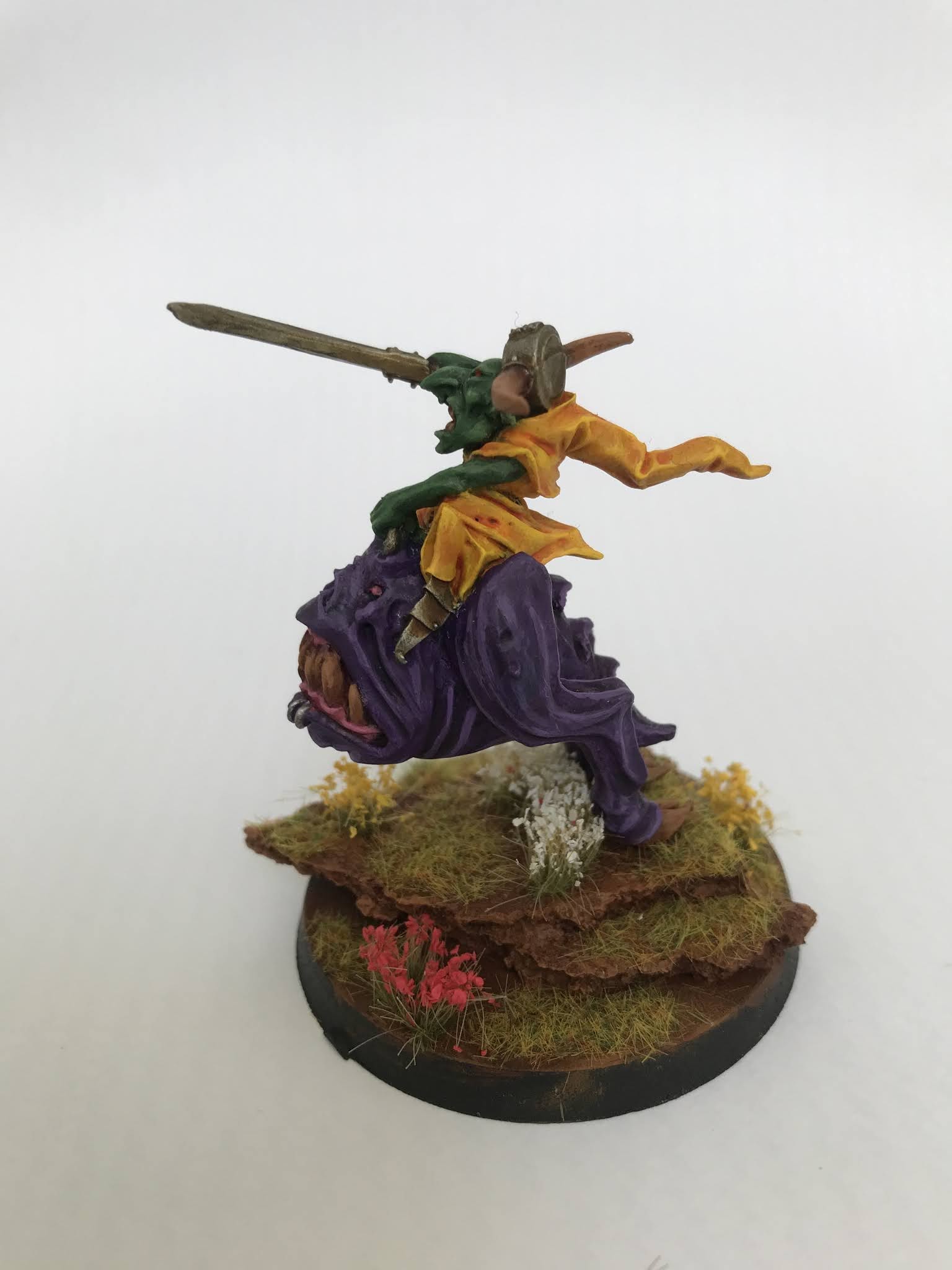
Profile: ‘Ardnog Squigtamer


"An DIS little squiggy goes RARRGNASHCHOMPBLARRRRG all da way 'ome."

Hailing from the Grotonnian satellite township of Gnashville, Squigtamer is a rare example of a genuine goblin success story. He made his fortune as a highly successful squig trainer, with some dozens of champion gnasher squigs emerging from his stables. Having amassed significant wealth on the face-eating circuit* he came to the attention of the king of Grotonnia and now oversees the royal stable on those occasions when the king does not like, trust or remember the name of the official Royal Squig-herd.

His days as an active trainer are largely behind him and the majority of his time is now dedicated to his popular Gnashcar team.

A point of some interest to scholars of Grotonnian lore - all two of them - is that the word 'Nog' is in fact dwarfish and has no roots in any branch of the goblin language. Such nomenclature is highly unusual in goblin society and considering the historic animosity between goblins and dwarfs is normally intended as an insult. In this instance it is unclear which party is expected to take the most offence.


*The famed Orc face-eating contests require a constant supply of squigs. Enterprising goblin hustlers will sometimes challenge Orcs to eat their squigs, on the basis that if the squig wins then the goblin gets to keep all the deceased Orc's possessions. Such goblins have an extremely short life expectancy, but those who survive invariably become exceptionally rich.

The Celestial Navigation of the Tallowlands

In common with many pocket planes, the Tallowlands are not bound to a particular realm. Occupying, as it does, a fold in realmspace, the world drifts on the ether-currents in the vast sky-ocean between the realms.

It is unknown how the world came to exist detached from the Great Spheres, but travellers through the realmgates occasionally bring rumours of other such worlds floating in their own autonomous pouch of existence.

Scholars have devoted years - lifetimes, even - of study to codifying the exact nature of the world's relationship with the surrounding cosmos. The most widely-accepted theory was first proposed by the great cosmochronologician von Marrison in his seminal treatise Astralle Weekes:

"That the realms are mighty cannot be questioned. But none sits so far above the rest that it can capture this world of ours for its own. Instead we travel an infinite circuit between the realms, sharing in the powers of each as we pass near.

Seasons hinge on our proximity and facing; indeed, as one side of the world turns away from a realm, another side shows itself to the sphere. Thus, as we face, say, Ghyran, do our forests bloom and our orchards blossom. Then, as our attention turns to Hysh we find our days stretch on in unbroken hours."

In short, it appears that the world's position between the realms directly causes its seasons and climates. This idea was expanded by the lizardman philosopher Tinkenhat in his sandstone carvings - now fully eroded but quoted at length by de Robilant in his Histories

"To us they seem so near as to be moons yet to them we are but a distant speck, a tiny fly in a barrel of ointment*"

The notion that the moons of the Tallowlands are in fact other realms is intriguing and explains why the normally-inert realmgates thrum with vitality when particular moons are in the ascendency and the magical forces fluctuate with the lunar tides.

As a side note, a small handful of goblin tribes are known to chase the various moons across the Tallowlands in the belief that, were they to catch one of them, they would achieve immeasurable power. This theory does suggest that these excessively insane greenskins are, rather disconcertingly, right.


*This last metaphor is likely de Robilant's own addition - flies in Tinkenhat's home jungle are rarely less than fist-sized, and lizardmen have no known concept of ointment.

Painting progress: Hilgoth

 A new faction, sort of!

I have always wanted to paint Bretonnians, although obviously Bretonnia doesn't exist in the Tallowlands and never has done. The faction background will be posted at a later date, i.e. when I have written it.


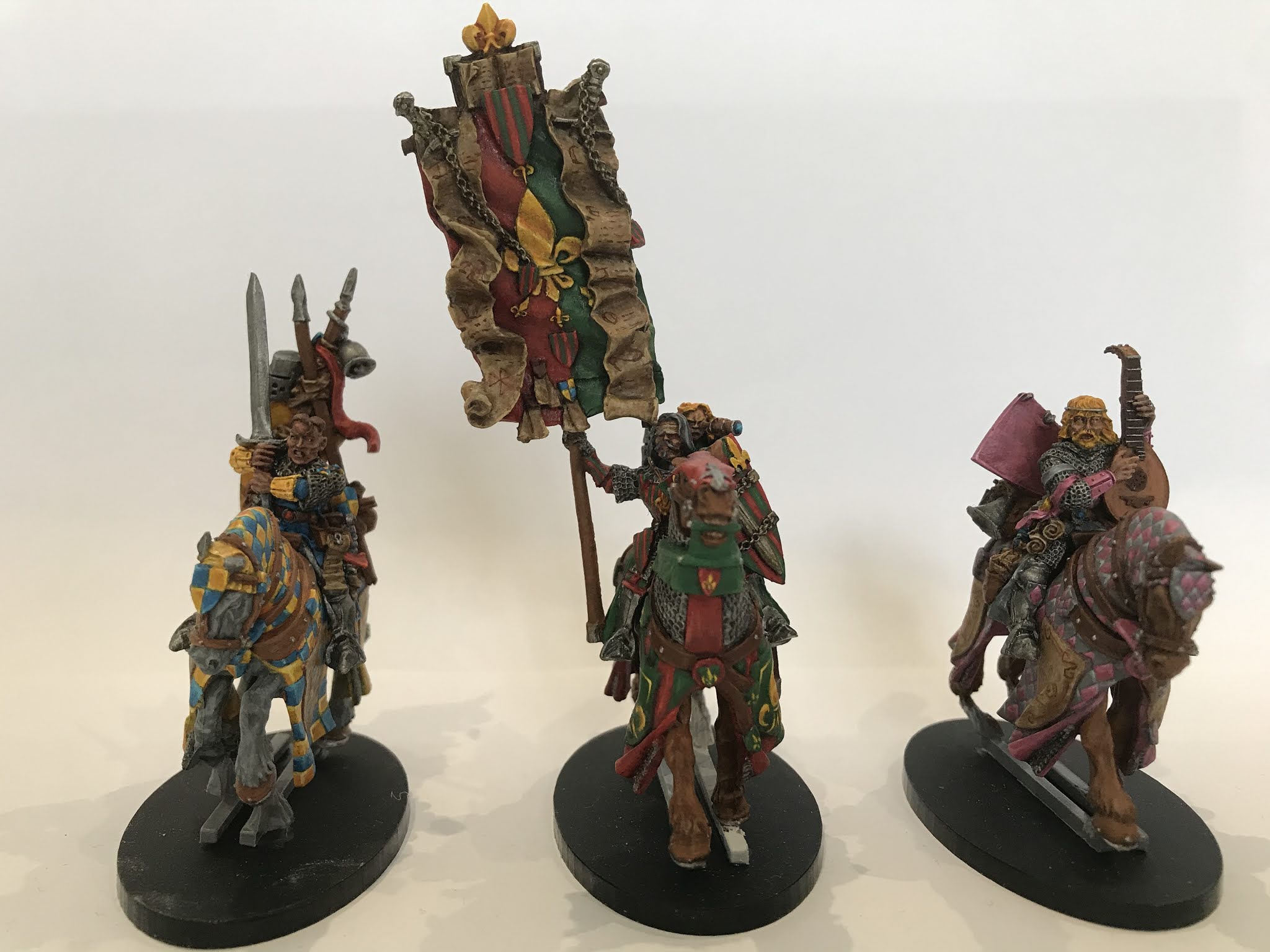
 I have started with the glorious mid-2000's Questing Knights because why not start with the best? First three knights painted. Bases to follow - I will be using milliput for these, which is a new experience for me and I want to practice on some lesser knights first...


                            Four symbols for the musician. Bonus points if you can spot the fifth.
 
 
The two unpainted shields will be done in the colours of the musician and the (as yet unpainted) other non-champion model. The champion can make his own arrangements.
 
A little advertising for the PCRC.

Hope you like them.

Faction: House Oakleaf

Lady Amberjill


An old noble house from the south-western reaches of Acheall*, whose groves encircle the largest frith-geard in all the Elven lands. Despite the harmony of their homeland, the Aclēafen are highly militarised and more aggressive than many of their neighbours. While long-established trade routes with human settlements (most notably Jeldenburg and Mirrorkeep) have maintained the House’s coffers even when other elves saw their resources dwindle, the Aclēafen have little fondness for humans, dwarves, or even many other elves, and have historically been swift to capitalise on any weakness shown by peoples whose lands border their own.

When the Felltide struck Acheall, the Aclēafen were the first House to send assistance to the northern boughs. Although they remain disliked by many of the wood-elf nations, it has never been denied that their unflinching defence was most likely what saved Acheall from being entirely destroyed before outside aid belatedly arrived.

Magic permeates much of the Aclēafen land (although this is not unusual around Acheall) and many faerie-dells and feysprings can be found in their territory. Whilst technically outside of the elven military structure, and strictly speaking not subjects of the Lord or Lady of the House, the spellweavers of the land are bound closely to the House through ancient pacts of protection and will not hesitate to fight alongside the House’s soldiers to protect their lands.

The current highborn is Lady Amberjill Vala Aclēafen.

*Which many of the peasant races know as "Oakhall".

Faction: Heralds of the New Dawn


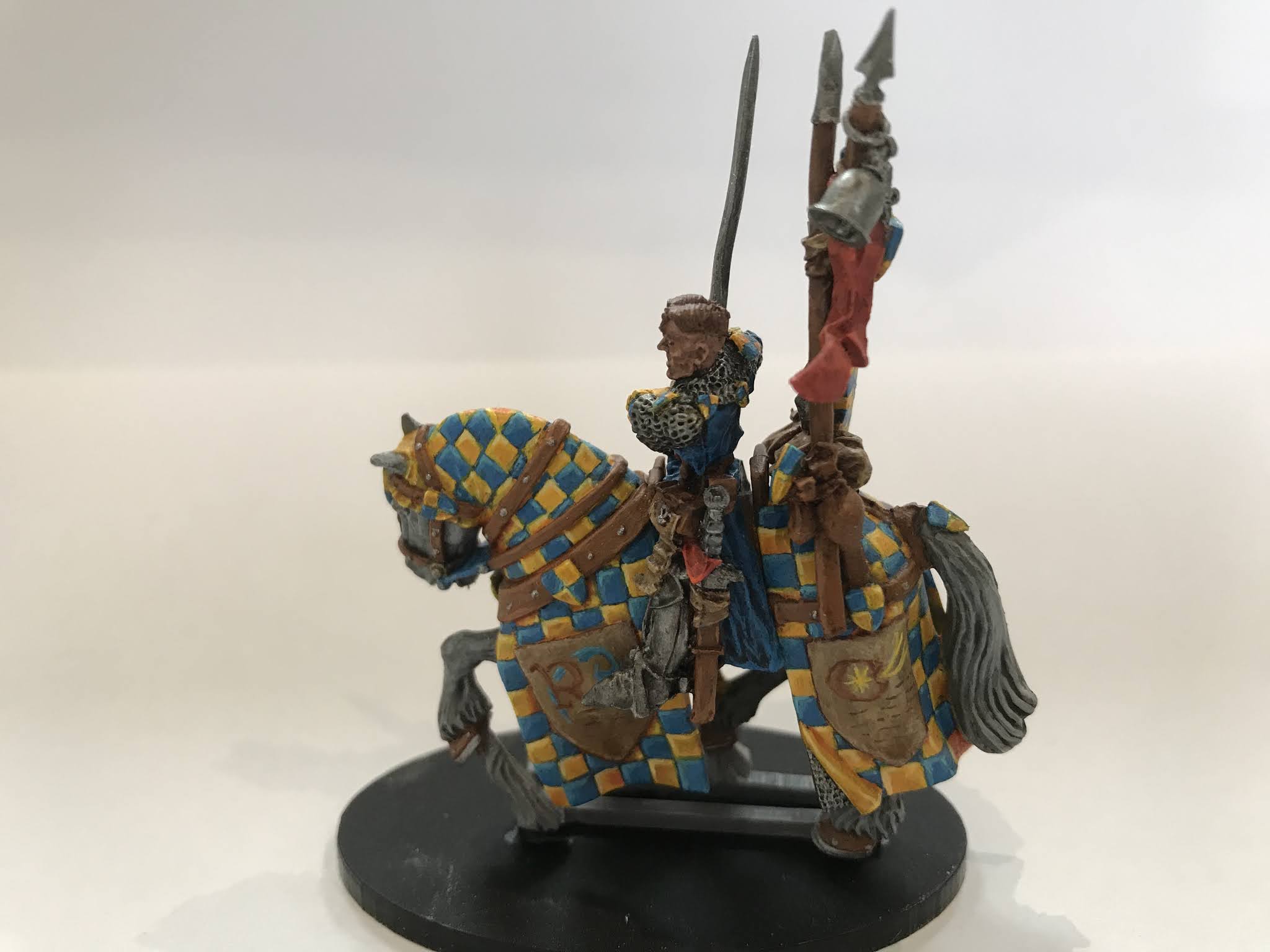
Checkers, chestplates and...some sort of chocobo.

The Heralds of the New Dawn are a minor sect of Primaris Bretonnians who believe that the best way to gather followers for their god is through highly visible acts of valour and public exhortations of the faithful. Whilst lacking somewhat in subtlety, their willingness to deliver actual practical aid to those in need has made them - and by extension their patron - extremely popular in the area around their stronghold of Szarno.

Profile: The Great Skritt


Believed to have arrived in the Tallowlands from another realm, the rat-scientist known as the Great Skritt has long harboured plans to dominate the Underland. Having manipulated, bullied or outright murdered a sufficiently impressive number of lesser engineers, he formed the notorious Skryrenet in order to harvest resources and influence warlords across the realm. This culminated in the Skaven Dread Council putting military decisions into the claws of Skryrenet, whereupon Skritt instigated a series of simultaneous civil wars designed to eliminate all power structures across the Skaven-held Underland and deliver full control to him.

His plan was close to succeeding when, desperate, the Skaven of the Dar'Koath caverns forged an alliance with the surface clans. An army of overland warriors led by Yan of the Connaghi entered the Underland and eventually destroyed Skryrnet's defence grid, causing Skritt to flee.

An unintended consequence of this was that the Underland goblins, previously weakened by their own infighting, saw opportunities to expand and a significant amount of territory was lost to goblin factions. Yan Connaghi remains in the Underland to this day, aiding the Skaven clans in battle against the goblins.

The Great Skritt disappeared for a period of time but has recently reemerged and seeks to rebuild Skryrnet. He seeks caches of warp-emerald, a potent energy source which will allow him to power a time-travel device he has built. Once he has enough warp-emerald to generate thirteen kilo-ratts of power* he will send the being known as the Verminator back in time to prevent Yan Connaghi from being born.

He believes that the fall of the Sinian Empire has left vast troves of warp-emerald free for looting. In particular, it seems that areas home to many Undead beings ("Gribblians", as they are known in the Skaven tongue) are rich in warp-emerald. Indeed, he has identified a Gribblian Terrorgheist whose hoard is likely to contain all the warp-emerald he needs.

Skritt is always accompanied by his pet, a well-trained rat called Morty McFlea. He intends to use McFlea to conduct the test run of his device.

It has been rumoured that, while on the run from the Connaghi, Skritt stole an item of value from the Underland goblins. The nature of this item is as yet unknown.


*Author's note: this is the power required to propel the device at a speed of eighty-eight miles per hour.


***CREDITS***

The Great Skritt was sculpted by none other than our very own Lord Blood the Hungry.

Profile: Da Green Night Gobbo


Nominally second in command to the Questin' Grot, the Green Night Gobbo is something of a loose cannon even by Grotonnian standards. Rarely expected - or even wanted - within the halls of Grotonnia's king, he wanders the surrounding region looking for easy plunder and unsuspecting victims.

Although he is at best an occasional presence in the armies of Grotonnia, he has an almost supernatural ability to arrive on the battlefield, unlooked-for and unheralded, a hero emerging from the mist, just as the fight is going really well. This unearthly sense of timing has earned him many descriptions in the tongue of the Underland - "myffic"*, "effeereul"**, and "annanigma"*** to list but three.

He has a nose for loot and on many occasion the Questin' Grot - sick of having his boots stolen or his codpiece pilfered - will convince the king to feed him to the squigs, only for the Green Night Gobbo to show up at that very moment bearing a new shiny bauble as a gift and weasel his way back into royal favour. Such an uncanny talent for self-preservation means he is most often known as "git"****.


*tr: "Git"
**tr: "Git"
***tr: "Git" 
****tr: "One of questionable personal and moral qualities"

Profile: The Twins


The Twins - known to their handlers as Big and Bouncy - are two of the most gruesomely cheerful denizens of Grotonnia. When they were younger, the Grotonnians would use them as bait in a Djael, or ambush, when hunting loot-carrying quarry. Now they have reached full maturity, they are a prized asset on the battlefield where they will be prodded into place by means of the 'Wunda-bar', a large and rusty iron spike. They will be maneuvered into a position in which they are both impressive and intimidating to the enemy commander, whereupon they will be unleashed in all their manic glee while the rest of the Grotonnians sneak round the back of the distracted foe and stab 'em up.


The Mystic Key

Hultz

Nathaniel Hultz looked around. He sniffed the air. It was here. It was here. He knew it, knew it without knowing how, but he knew it.

It had been close before, close enough to sense, but always whisked away – somehow – by unknown hands whenever he got near. This time was different. This time he had veiled his seeking and hidden his plans and now was in the presence of his reward.

The key. The unknown key; the infuriatingly, maddeningly unknowable key. A key to what? He could not even guess. But he had paid a steep price for the visions which guided him and he would not allow it to have been in vain.

Movement across the way brought him back from his thoughts and into the present. The barbarians were in position and ready to search. He wondered if he could trust them to surrender the prize if they found it first; probably not, by his reckoning. It did not matter – his own servants had been summoned and he would overwhelm the barbarians with cosmic fire once their usefulness expired. They were the hounds of a feral god and deserved no better.

He drew a deep breath and readied his mind. It seemed strange to think that he had expected to find the key in some deep dungeon or in an impenetrable fortress, such was its pull. And yet, here he stood, knee-deep in mist on the edge of some nameless, dreary town too close to the Tolerance to be called civil. Perhaps, when his life’s work was finished and songs sung of his deeds, the story would be changed to better suit its significance.

He saw the barbarians step forward to begin the search. With a thought, he commanded his own followers to do the same.

It was time. 


************

Torpal

Torpal tried not to grin. He knew the pretence was almost over; battle was nigh, he could feel it. It had been too long coming and a reckoning was due.

For months now, Torpal and his priests had travelled across Rhô, spreading worship of the Warhound to the towns and villages they passed through. Mostly they were run out of town before they could sow more than a token scattering of war-fever among the populace, but Torpal was old enough and wise enough to know that a true inferno rises from many lesser fires and that he may well have perished before his life’s work truly bloomed to its full, raging glory.

A few settlements, however, had proved to be receptive to his exhortions and their – mostly impoverished and resentful – inhabitants had turned their streets and squares into cauldrons of fury. Peasants became gladiators and revelled in their brief moments as gore-soaked champions until they were cut down by their friends and neighbours. From these theatres of combat a mighty few emerged triumphant, worthy of their new place at Torpal’s side.

They had been diverted from their task by the appearance of the one called Hultz. He had offered them gold in exchange for their assistance in seeking a mysterious treasure, and in doing so had revealed his own foolishness. For it was clear that Hultz had identified Torpal’s men as followers of the Warhound, and further still it was clear that he was one of the myriad ‘civilised’ men who saw the Wild Gods as brutish loners whose sole occupation was jostling for supremacy with each other. But like any clansman, Torpal knew that the gods bartered and bargained with each other. Indeed, the one known as the Other Trickster had appeared to Torpal in a vision. He had offered Torpal information and, when Torpal asked what it would cost, had said that Torpal knowing was price enough. Torpal was certain that there would be a hidden cost, but had agreed and was granted knowledge of Hultz and his quest. So it was that when Hultz approached him for aid, Torpal held in check his desire to cleave the dandy’s head from his oh-so-finely-cloaked shoulders and accompanied him across many lands to this unremarkable field on the edge of this mean, measly town.

Torpal knew that Hultz was a wizard – he could almost smell the magic oozing out of the man’s pores – and he suspected him of being a lapdog of the Treacherous One. As such, it seemed to Torpal that despite being a fool and a braggart Hultz would be possessed of a measure of cunning and would have secret followers of his own to summon. It was to be expected that Hultz would betray Torpal’s men once he had found what he sought.

It was no surprise to Torpal therefore when the magic coalesced into a cohort of twisted beings. A powerful retinue emerged around Hultz, and Torpal was certain that Hultz was capable of more. They were on opposite sides of the field, ready to search for the mysterious item which Hultz sought. From across the field Torpal was sure that he could see Hultz smirking, secure in his superiority.

Torpal’s instinct was to pre-empt the inevitable betrayal and attack, but he was genuinely interested to know what it was that Hultz was seeking. In any case, Torpal had reason to believe that his men would be aided in battle from an unexpected quarter. In his arrogance Hultz had neglected to give any thought to the town on whose border they stood. He did not even know its name. But Torpal knew.

He had been there before. 


************

Prologue

As Hultz and Torpal instructed their followers to begin the search a thin breeze blew some of the mist away. For a brief period the long grass and tall weeds of the field could be seen, bending a little in the wind. Then something else emerged. A number of curious and unexpected shapes – piles of things, floating rocks and other such items – could be seen among the greenery. Certainly they had no cause to be in a place such as this, and the watchers could not be sure if they had been there all along or whether they only appeared when observed.


Suddenly there was movement near the centre of the field. Something glanced over the tops of the weeds and shrieked when it saw the assembled searchers. A gust of wind – much stronger than before – burst over the field and blew down the vegetation. Visible to all was a strange goblin, clearly panicking as it shovelled pieces of gold and silverwork into a bizarre, living satchel-creature.


Torpal’s eyes widened in astonishment. “Lühtefiend!” he gasped, disbelieving. The goblin yelped once more and dashed into a patch of longer grass, vanishing from sight.
 

************

 I GM'd a game at the weekend between Father Torpal, priest of Rorralarach (Lord Blood the Hungry) and Nathaniel Hultz, alleged boss of Jethelech (Omricon). Mostly the intention was to start to familiarise ourselves with the Age of Sigmar rules, but everyone knows narrative games are the best so we took the opportunity to write in a cool setting and start to nudge the Tallowlands story along. While I'm not going to give you a blow-by-blow account of the game (although a few battle photos will hopefully appear in the near future...), some of the stand-out moments were:

- Torpal using an ability on the ground, in the hope of making the treasure goblin run towards him (this was one of those delightful moments you get as a GM, where one of the players does something you would never have come up with yourself).

- A unit of 5 Pink Horrors getting chopped up in melee and the unit managing to end the turn with 5 pink and 10 blue Horrors. Maffs.

- Torpal inciting the locals to fight with absolutely everybody, earning Lord Blood some victory points and Rorralarach a new town.

- Shanduko appeared!


- A Slaughterpriest went to investigate a floating, glowing rock and was really disappointed to discover that it was only a floating, glowing rock.

- Hultz grabbed the treasure goblin (and key) and then acted exactly as you'd expect by leaving his followers to get pummelled while he made a run for it.

All of these were great, but by far the best moment for me was seeing the look on Omricon's face when he realised that there was a treasure goblin to pilfer. Pure joy.

Profile: The Unslumbering

For over three hundred years the folk of south-western Rhô have told legends of a lizard-warrior who stalks the land ceaselessly, never sleeping, searching for something hidden or lost in ages past. Some claim that it has appeared suddenly to aid them against bandit attacks on journeys through remote places. Others swear that it can be seen skulking around unremarkable hillside caves and inland gorges.

Records show that these stories began at the same time that a lizard-noble from a distant land arrived in Rhô. Its purpose was never revealed, but it carried many titles and honorifics - Watcher of the Sun and Moon, Star-sentinel and Unslumbering One to name but a few. When - or even if - it ever left Rhô is unknown.

To those in its homeland, it is known as Sleepless Insi'atl.

Regions of the Dar'Koath Highlands: Wō

Situated in the central Highlands, between the lands of the Connaghi and the Jarlings, Wō is a small, densely-wooded and unpopulated region. Deep in the heart of this place is a tree, ancient beyond reckoning and imbued with a terrible and mysterious power. Possibly it is home to an elder fey, or maybe it contains a trapped daemon - in any case, aspiring champions of the Dar'Koath clans will undertake the perilous voyage to the tree in order to seek the blessings of the Wild Gods.

Occasionally, a clan will earn the favour of the greater powers and a host of wild beings will march from the forest's boughs to aid the clan in warfare. This is heralded by a mighty storm which blows leaves of magical and unnatural colours across the lands. These are known to the clans as the Tears of Wō.

The Tree of Wō